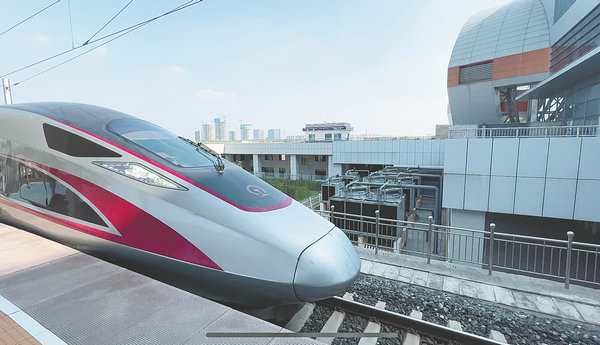
China's High-Speed Rail
Introduction
China's high-speed rail network is renowned for its rapid growth and advanced technology. As of the end of 2021, it covered over 40,000 kilometers, making it the largest high-speed train network in the world. This vast network has transformed travel, revolutionizing domestic transport and extending China's technological influence internationally. The Fuxing trains, a flagship of this innovation, represent the pinnacle of Chinese engineering and manufacturing excellence, symbolizing the country's commitment to advancing rail technology.
Historical Development
The development of high-speed rail in China began in earnest in the early 2000s, driven by the nation's need to accommodate its vast population and rapid urbanization. The first high-speed rail service was launched in 2008, connecting Beijing and Tianjin. This marked the beginning of a new era in Chinese transportation, characterized by expanding networks and increasing train speeds.
In 2010, the Master Plan of ASEAN Connectivity adopted by Southeast Asian Nations underscored the strategic importance of China's railway technology, influencing regional infrastructure development. Recognizing the potential of high-speed rail, China forged international partnerships, such as the memorandum of understanding with Thailand in 2014 under the Belt and Road Initiative, to share its expertise and technology.
Technological Innovations
China's high-speed rail system is a testament to its engineering prowess. The Fuxing trains, capable of reaching speeds of over 400 kilometers per hour, exemplify cutting-edge rail technology. These trains are equipped with advanced systems, such as permanent magnet synchronous motors, developed by researchers like Professor Huang Xiaoyan and her team at Zhejiang University, which enhance energy efficiency and reduce operational costs.
The continuous innovation in train technology has allowed China to overcome technical bottlenecks and maintain a competitive edge in the global rail industry. Engineers like Wang Lichao at the Chinese Academy of Railway Sciences have been pivotal in driving advancements that optimize production processes and address quality challenges in rail manufacturing.
Economic and Social Impact
The expansion of China's high-speed rail network has profoundly impacted its economy and society. Cities and towns across the country, like Qiandaohu in Zhejiang province, have experienced significant transformations. The new rail lines have not only reduced travel time but also boosted local tourism and economic activity, as seen in Zibo, Shandong province, where the Hilton Garden Inn capitalizes on its proximity to high-speed rail stations.
The high-speed rail network facilitates efficient transportation, enhancing connectivity between major cities and remote regions, thereby fostering regional development and integration. The increased accessibility has also spurred urbanization and contributed to the modernization of smaller towns, offering residents improved living standards and economic opportunities.
Global Influence and Cooperation
China's high-speed rail technology has not only reshaped its domestic landscape but also extended its influence globally.Through initiatives like the Belt and Road Initiative, China aims to share its technological advancements with other countries, enhancing global connectivity and economic collaboration. The high-speed rail system serves as a bridge for international exchange, promoting mutual understanding and cooperation.








